
Denver Busted Mugshot Roles
Denver is not just one city among many here. The City and County of Denver runs as a consolidated home-rule government, with city and county geography covering the same ground for this project. That is why there is only one Denver page. Aurora, Glendale, Lakewood, and Englewood may fill metro news, but they sit outside Denver County and do not belong in a Denver arrest search.
The shared government still splits arrest and custody duties. The Denver Police Department patrols, investigates, makes arrests, and writes police reports. The Denver Sheriff Department books and holds people, runs the Van Cise-Simonet Downtown Detention Center and Denver County Jail, transports detainees, and guards the courts. A DPD report tells the police side. A DSD entry tells you where someone is held. Neither gives the final court outcome.
How many people does this cover? The Census Bureau estimated 740,613 residents in Denver County on July 1, 2025, up from 715,522 counted in the 2020 census. Even at that scale, there is no browse-all jail list. Denver's official custody portal works only as a targeted name-or-number search.
A Denver booking photo and its initial charge document an arrest. Charges can shift or vanish, and the court record holds the outcome.
Where Denver Busted Mugshots Appear
Official Denver channels answer narrow and different questions. None of them is a public face gallery. Start with the agency that owns the record, and turn to private pages only after the official custody and court sources come up empty.
| Channel | Photo? | Status | Best use |
|---|---|---|---|
| Denver Inmate Search | No photo displayed | Official DSD | Named person in current local custody |
| DPD arrest-photo request | When detention-center processing produced one | Official DPD | Known recent arrest after intake |
| DSD public-record request | Request may seek the intake file or image | Official DSD | Known booking record, including after release |
| DPD Crime Information | No booking-photo series | Official DPD | Reported-incident trends and map context |
| Local news desks | Sometimes story-specific | Editorial | Context, affidavits, agency statements, and court leads |
| RecentlyBooked | Denver cards currently lack county photos | Unofficial | Secondary rolling booking snapshot only |
| Mugshots.com | Historical photos | Unofficial and stale | Not suitable for present custody |
The order you search in matters. A name missing from the locator can reflect intake delays, spelling problems, release, transfer, confidentiality, or a different system entirely. It does not prove the arrest never happened. In the same way, an old private card cannot show that someone is still held right now.
Note: Denver has no Sheriff mugshot app; Colorado VINE provides custody alerts and release notices, but no booking photographs.
Finding Denver Busted Bookings
Every Denver booking starts in one spot. The Van Cise-Simonet Downtown Detention Center processes each person taken into local custody. From there, DSD may keep the individual at the Downtown Detention Center or move them to the Denver County Jail. When you search, lean on identifiers and the person's current custody status. That narrows things down fast.
- Search Denver Inmate Search by last and first name, booking number, or CD number. Use the facility filter only when the location is known.
- Compare age and other identifiers rather than relying on a common name. Open the detail and save the booking number, CD number, arrest case, court docket, and facility.
- If the arrest is very recent, search again after intake has had time to proceed. Call 720-913-3600 when local custody is still believed likely.
- If the person was released, request the DPD arrest record or recent photo, or seek DSD's booking and intake file under the CCJRA.
- Use the booking and docket details in Denver County Court or Denver District Court, based on the case. Request a filed disposition when the calendar does not give the result.
The locator has clear limits worth knowing. It tracks active Denver jail custody only, so it won't surface an older arrest, an unexecuted warrant, or someone held on a CDOC sentence. Federal and immigration custody sit in entirely separate systems. For anyone sentenced into the Colorado Department of Corrections, the CDOC offender search is the right tool. The Denver County booking records hub walks through all of these custody branches in detail.
Denver Arrests Lack a Blotter
Denver has no daily arrest log. No public blotter exists, and there is no recurring mugshot feed from DPD or DSD. The Denver Inmate Search tool needs a name or an identifier before it returns anything. There's no browse-all option, no booking-date filter, and no button for today's arrests.
So where does public crime data live? DPD's Crime Information tools fill part of that gap. The crime map plots reported incidents from the prior twelve months and refreshes Monday through Friday. Dashboards add year-to-date, last-28-day, last-180-day, and full past-year views, usually with a two-day processing lag. All of it counts reported incidents under NIBRS rules. That matters, because an incident can appear without any booking, and a booking may involve details a map point won't reveal. The official DPD Crime Information page draws that line clearly.
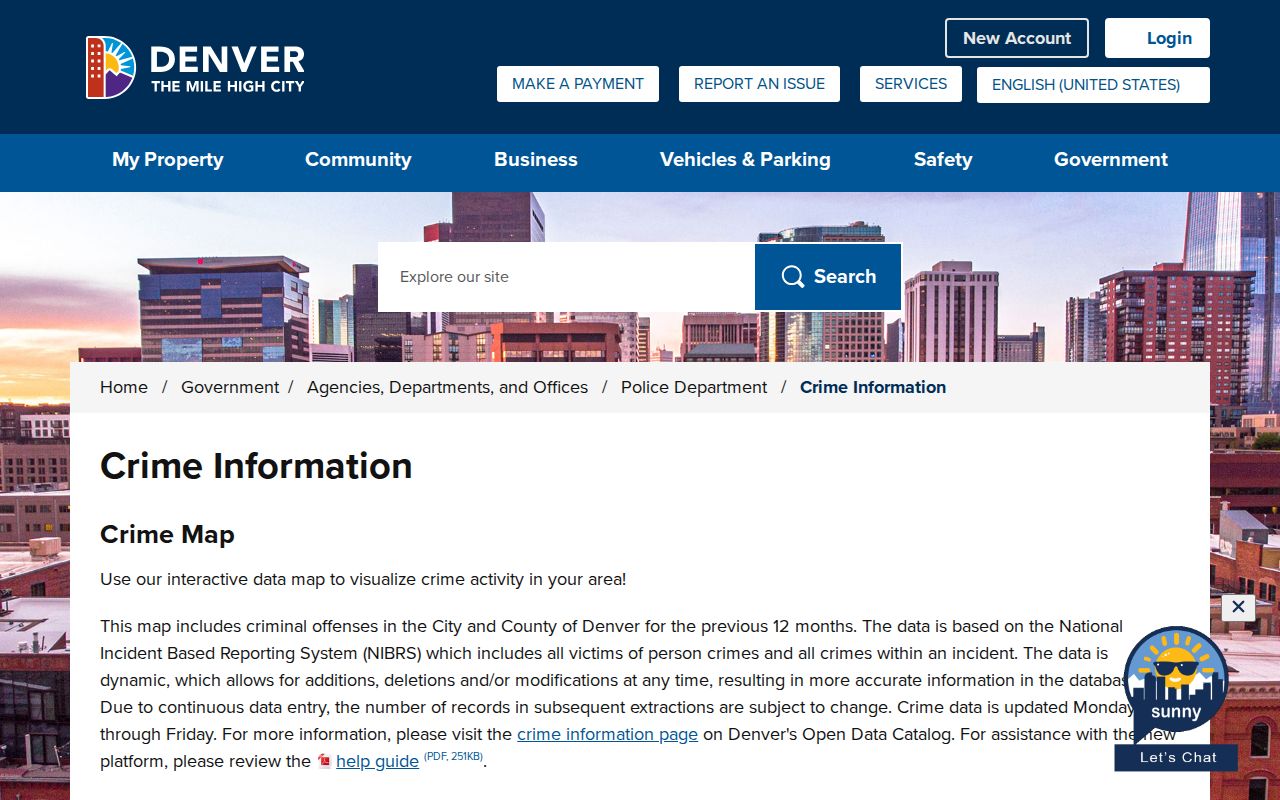
The dashboard can tell you where reported events cluster across the city. What it cannot tell you is who was arrested, booked, or released.
Denver Police Arrest Records
Keep two record systems straight. DPD holds the police-side arrest record plus a separate recent-arrest photo, while DSD keeps the jail booking material. A DPD arrest record typically lists the name, arrest dates, initial charges, fingerprint class, and booking numbers. One caveat from the department itself: the record does not show final disposition.
Ordering online is an option. By mail, DPD charges $15 for an arrest record and $9 for a recent arrest photo. The form requires identifying arrest information, payment, and a self-addressed stamped envelope. Send it to the Identification Section, 1331 Cherokee St., Room 416, Denver, CO 80204-2787. Expect a response in five to ten business days per DPD's records page. Also note that no photo comes through this route unless the arrest involved detention-center processing. The official DPD Police Records page lays out the full order process.
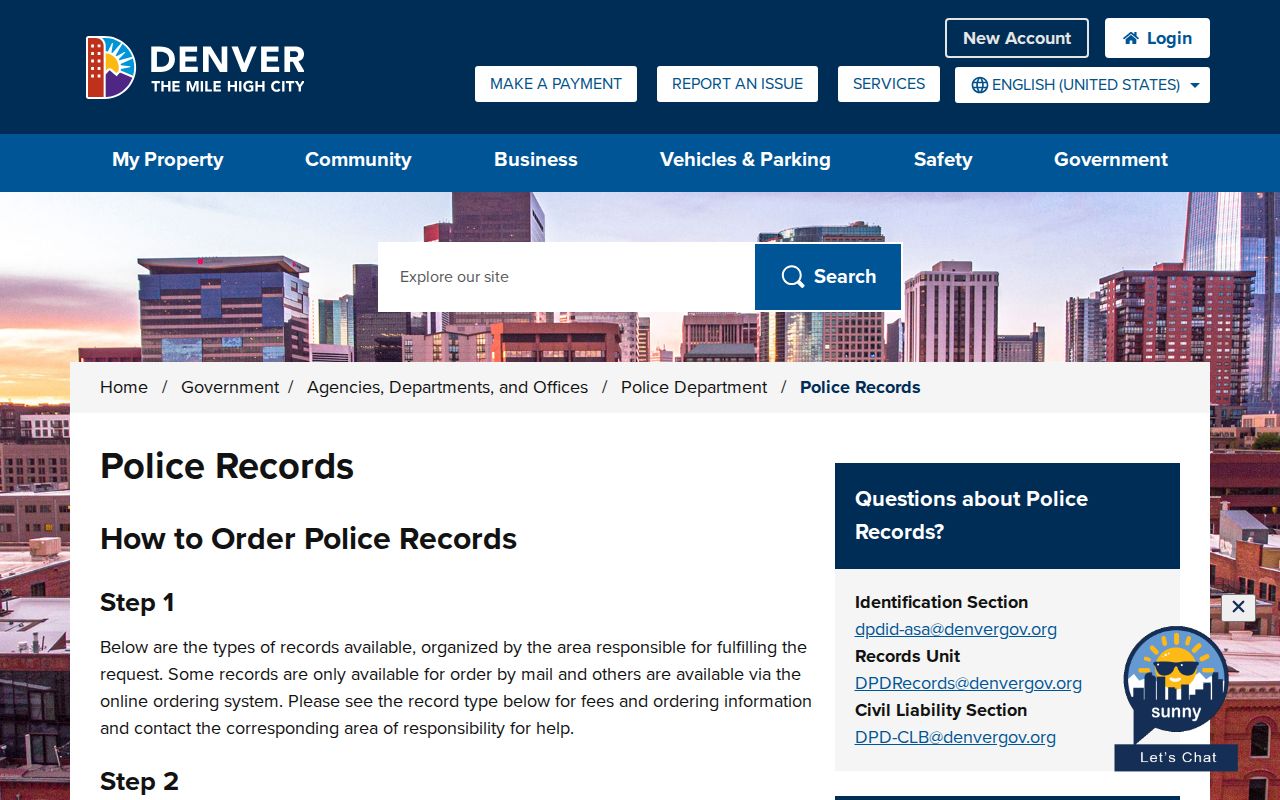
In short, this channel works when you already know the arrest event you're asking about. It is not a browsing tool.
Denver Police Department Identification Section1331 Cherokee St., Room 416
Denver, CO 80204-2787
Information desk: 720-913-6010
Non-emergency: 720-913-2000
For jail-side material that goes beyond the basics, the Denver Sheriff Department's electronic public-records form is the right tool. The first hour of staff work is free. After that, paper copies cost $0.25 per page, and staff time can run up to $41.37 an hour. Expect an estimate first if your request involves at least 25 pages or more than one hour of labor. Be aware that DSD posts neither a set fee for booking photos nor a guaranteed turnaround time.
Denver Intake Creates Mugshots
Why might a fresh name take a while to show up? Intake is the answer. According to the DSD family and friends handbook, booking includes a digital mugshot, a right-index fingerprint, medical and mental-health screenings, a property inventory, a pat search, and metal-detector screening. Fingerprint cards go electronically to the FBI and the Colorado Bureau of Investigation. DPD Identification also runs a warrant check after classification and searching.
The whole process typically runs two to six hours, though jail staff control only part of that timeline. Treat the range as background. It is not a promise that the public locator will post someone within six hours, since intake may still be underway, and a simple spelling difference can also cause a miss. The smart move is to retry the official search or call the inmate-information line rather than trust a social media post or assume release.
- Booking
- The jail intake process that creates custody identifiers, records property, and documents the initial charge information.
- Booking photo
- The digital identification image taken during Denver intake, though the public locator does not display it.
- Disposition
- The court's recorded outcome, which is separate from the charge shown at booking.
Once intake finishes, a person can be moved between the Downtown Detention Center and the Denver County Jail. Facility placement can shift, so confirm the current location before any visit or phone contact.
Note: DSD publishes no exact locator refresh schedule, so the intake estimate should never be treated as a web-posting deadline.
Denver Crime News Images
Denver gets steady daily crime coverage, though no outlet keeps a standing mugshot gallery. Denver7 and the Denver Gazette frequently run multiple crime stories on busy days. 9NEWS, CBS Colorado, and FOX31 push breaking updates. The Denver Post handles crime and public safety beats, while Westword publishes police, court, and immigration reporting focused on the city several times each week.
Photos ride along with the stories themselves. A given image might be a scene shot, a video frame, a police vehicle, an agency handout, a court exhibit, or now and then a booking or wanted photo. Newsrooms usually credit DPD, another agency, prosecutors, an affidavit, or a court filing, and that attribution can point you toward the official source. Still, news is selective by nature. It cannot capture everyone booked in Denver or tell you who remains at DDC.
Geography needs a second look too. A Denver station may report an arrest that happened in Aurora or Lakewood. Check the dateline, the arresting agency, the jail, and the court before assuming a Denver County booking. More on how often each outlet posts and where its material comes from appears in the Denver County Crime News coverage.
Note: A face attached to a story may come from an agency handout or court file, not from Denver's original jail intake photo.
Denver Busted Records After Release
Once someone leaves the Denver jail, the current-custody locator may stop returning results. The record itself does not disappear, though. Request the DPD arrest record for the original police-side charges and booking numbers, the separate photo when one is available, or a DSD booking and intake file. From there, carry the case identifiers into the proper court.
Denver runs two court tracks, split by jurisdiction. Denver County Court maintains its own Quick Search and records system. Denver District Court sits in the Second Judicial District and works through Colorado Judicial dockets and document-request channels. A docket shows scheduled events. It does not spell out the final result, so ask the clerk for the official register, an order, or a certified disposition when you need one.
Private sites come last. RecentlyBooked hosts an unofficial rolling 30-day Denver section and notes that Denver County does not release mugshot images. Mugshots.com's genuine Denver branch does show photos, but its newest visible arrest dates back to November 2011. Such pages can lag, skip corrections, or preserve stale material. Three other commonly named aggregator brands had no verifiable local section at all. Official DSD, DPD, and court files control.
A released person can still have an open case. Release is not a dismissal or an acquittal. Track the court record to its filed outcome, and keep the booking number, arrest case number, and docket together so the right Denver record stays linked to the right person.