
Denver Busted Booking Records
An arrest in Denver leaves paper trails in more than one office. Patrol officers, the investigation, the arrest, and the police report all belong to the Denver Police Department. Custody is a different story. The Denver Sheriff Department takes over at the Van Cise-Simonet Downtown Detention Center. It handles booking there and runs both that center and the Denver County Jail. So the split is simple. DSD keeps the local booking and custody file, DPD keeps its own arrest-side material, and any resulting court file lands in Denver County Court or Denver District Court.
A mugshot is the ID photo snapped during intake at the detention center. It sits in a booking file next to identity details, custody notes, charges, bond figures, and court-routing data. Nothing more. A photo alone won't say how a case ended. Treat Denver County busted mugshots as a starting point, then check the court's recorded result for the full picture.
Denver Busted Intake Timing
Denver documents its intake process well. The official DSD family and friends handbook describes the routine: a digital mugshot, a right-index fingerprint, a property inventory, medical and mental-health checks, and various search and safety steps. Fingerprint cards travel electronically to the FBI and the Colorado Bureau of Investigation. DPD Identification also runs checks for additional warrants after classification and searching.
Plan on two to six hours for full intake, and sometimes longer. That lag explains why someone arrested moments ago may not appear in the Denver County inmate locator right away. No rule promises an online record within six hours. Formal classification can trail behind by a day or two, and people also move from the downtown intake center to the Denver County Jail without any new arrest.
Can a Denver mugshot exist before a public result? Yes. Intake creates the digital photo, but the public locator shows no image and DSD publishes no fixed update schedule for its portal.
Note: A short search delay can reflect active intake rather than release, transfer, or the absence of a booking.
Denver County Booking Fields
The live locator ties a person to whatever data gets entered: facility, active booking, arrest case, docket number, charges, court setting, and bond. Blank fields simply mean nothing was supplied. Read the labels carefully. "Active" describes custody or booking status, not the strength of a case, and a listed court date marks a scheduled event and nothing else. A charge, meanwhile, is just what got recorded at booking.
- Identity
- Name, age, sex, race or ethnicity, hair and eye color, height, and weight may help distinguish people with similar names.
- Booking identifiers
- Booking number, CD number, booking date, arrest case number, facility, and booking status tie a result to the local custody event.
- Charges and agency
- Case type, holding or arresting agency, charge level, code, and description reflect the record at that point in time.
- Court and release
- Docket, warrant number, court date, room, time, status, and bond may route the search to the next official source.
The DPD arrest record is narrower. It lists the person's name, arrest dates, initial charges, fingerprint class, and booking numbers. The final disposition stays out by design. A recent arrest photo is a separate product altogether. DPD will say none exists when the arrest never involved detention-center processing.
Denver Busted Photo Requests
Two official request routes exist. Mixing them wastes time. DSD accepts booking and intake requests only through its electronic form. DPD handles things differently, offering an arrest record and a separate recent arrest photo online or by mail. Pricing differs too. DPD posts fixed prices, while DSD applies broader criminal-justice records research and copy charges.
- Collect the full name, date of birth if known, booking or CD number, arrest date, and case number. Tight dates reduce retrieval work.
- For the sheriff file, use the DSD public-records page and ask for the “booking/intake record and digital booking photograph.” Telephone and social-media requests are not accepted.
- For the police record or recent photo, use DPD Police Records or mail form 241A with the requested identifiers, payment, and a self-addressed stamped envelope.
- Read the agency response for redactions or withholding. If the goal is the result of the case, use the docket and ask the proper court for its disposition.
The official DSD page shows where the broader request begins.
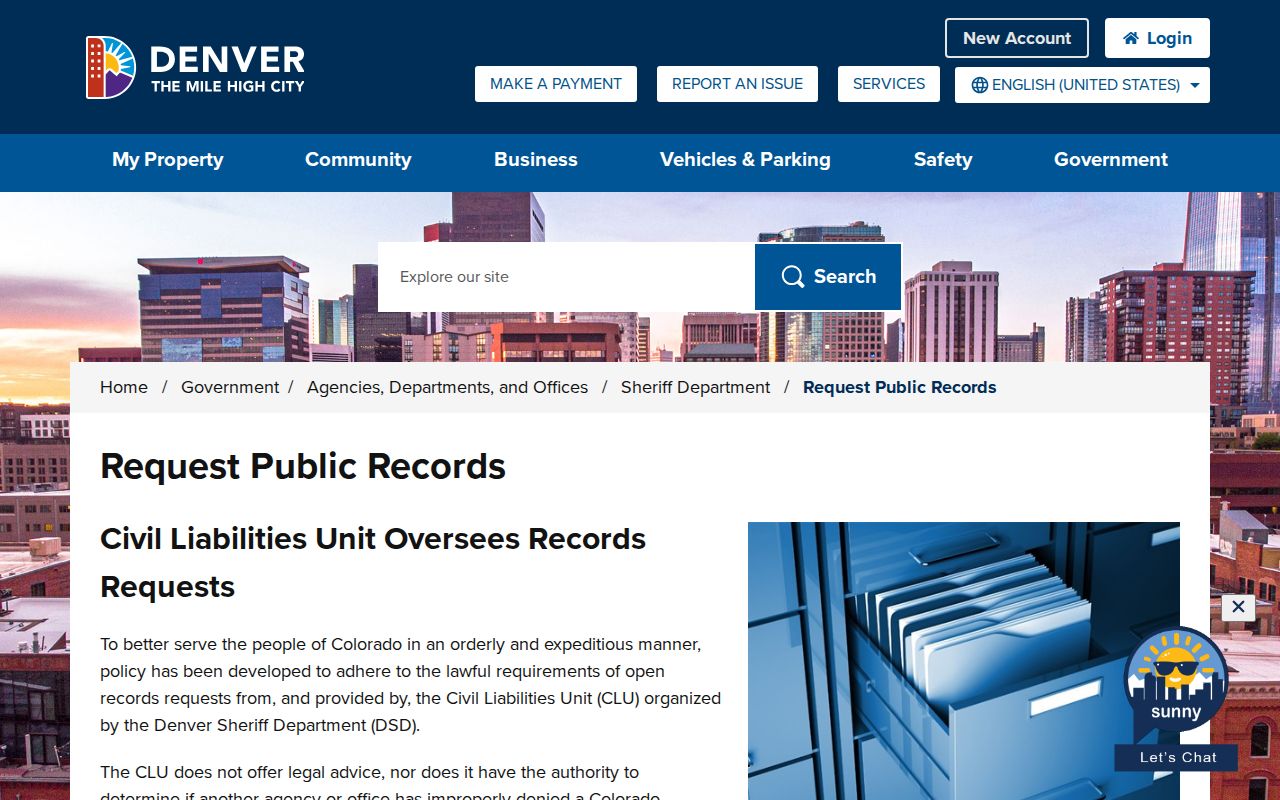
Whatever route you choose, identify the exact intake event in the request. DSD posts no fixed mugshot price and no sheriff-specific production deadline.
Denver Booking Fees Compared
Denver's two fee schedules serve different requests. DPD charges $15 for an arrest record and $9 for a recent arrest photo, and its records page estimates five to ten business days for a response. Mail requests go to DPD Identification Section, 1331 Cherokee St., Room 416, Denver, CO 80204-2787, with a check or money order payable to Manager of Finance plus a stamped return envelope.
DSD bills differently. The first research hour is free, paper pages cost $0.25 each, and staff time can run up to $41.37 per hour. Requests needing 25 pages or more, or over one staff hour, get a written estimate for approval first. Work starts after approval, and delivery follows payment. One caution: CCJRA sets no blanket deadline, so neither the court's nor DPD's response target applies to DSD.
Note: The fixed $9 DPD photo charge is not the price for a broader DSD booking-file search.
Colorado Mugshot Access Law
The Colorado Criminal Justice Records Act, C.R.S. §§ 24-72-301 through 309, governs most of this terrain. Records of official actions stay open to the public, subject to legal exceptions, while other criminal-justice material depends on custodian discretion, privacy concerns, active investigations, and mandatory withholding rules. A booking photograph lives inside that framework. So no, you cannot assume every Denver County mugshot is automatically open to every requester.
One statute deserves special attention. C.R.S. § 24-72-305.5 bars obtaining a booking photo when you know it will land in a publication or on a website that demands money or something else in exchange for deleting it. The DPD photo form makes you affirm compliance with that rule, and a false affirmation carries punishment. The law also stops short of ordering automatic removal of accurate images. Payment demands should never substitute for source correction, a valid sealing process, or a court order.
Note: Access can depend on the custodian, the record type, privacy limits, and the status of the case.
Denver Busted Records and Sealing
Two different problems call for two different fixes. Is the DPD or DSD record simply wrong? Send the custodian the record itself or its URL, an identifier, a plain account of what's incorrect, and any official paperwork that backs you up. Did the charge change or the case resolve in court? Start by pulling the court disposition. Colorado's Seal My Case hub sorts matters into five lanes: cases with no charges filed, eligible non-convictions, county or district convictions, municipal convictions, and situations involving multiple eligible cases.
Timing rules depend on the offense level and how things unfolded in court. Current court material lists waiting periods of one year for petty and petty-drug offenses, two years for class 2 and 3 misdemeanors plus drug misdemeanors, three years for class 1 misdemeanors, class 4 through 6 felonies, level 3 drug felonies, and most level 4 drug felonies. Certain other eligible offenses carry five years. None of these windows are guaranteed. Pending matters, restitution, excluded offenses, or other open cases can all shift what qualifies.
When an official source corrects itself, an old cached search result can linger. A search engine's outdated-content process may clear that. RecentlyBooked runs a free removal policy for dismissed, sealed or expunged, wrong-person, juvenile, duplicate, inaccurate, or outdated entries. Mugshots.com offers free removal for documented sealed, expunged, restricted, identity-theft, or death cases, plus free updates after favorable dispositions. Both are private policies that can change. Check the live instructions before acting. Several other named aggregators show no verified Denver section or free policy, and none should be invented.
Denver Juvenile Arrest Records
Juvenile files work differently. Colorado keeps law-enforcement records and identifying information about juveniles closed as a general rule under C.R.S. § 19-1-304, with listed exceptions. Suppressed cases and protected documents can be restricted too. So the adult locator never claims to list every law-enforcement contact, and a missing juvenile name tells you nothing about whether contact happened.
The process is expungement, not the adult version called sealing. Eligibility and timing hinge on how the case concluded and on the exclusions built into C.R.S. § 19-1-306. Judicial forms JDF 301, 302, and 304 handle delinquency records, and separate forms cover certain contacts that never became referrals. An official order governs access to the record it covers. Copies already made may not vanish right away.
Note: A sealed-record response may state that no record exists, so a search miss cannot support a factual conclusion.
Find Denver Busted Mugshots
Start with custody status, not a name search. Someone currently in local intake or Denver jail custody should appear in the DSD locator. Released on a local arrest? That points to a DPD or DSD records request. A person serving a state sentence belongs in CDOC Offender Search. A federal or immigration hold needs its own federal locator. This order matters. It guards against the most common mistake people make, which is reading one empty result as proof that no record exists.
- For a very recent arrest, allow for intake and search the official Denver locator by name, booking number, or CD number. Call 720-913-3600 if current local custody is still believed.
- For current custody, confirm the facility, active booking, identifiers, charges, agency, court setting, and bond when listed. The locator shows no mugshot.
- After release, order the DPD arrest record and recent photo when available, or request the DSD booking and intake file.
- For a state sentence, search CDOC. For a federal sentence use BOP, and for civil immigration detention use ICE ODLS.
- Use the docket or case number to find the correct Denver court and obtain the filed result rather than guessing from the booking entry.
The first web stop for a named custody search is the official Denver Inmate Search interface.
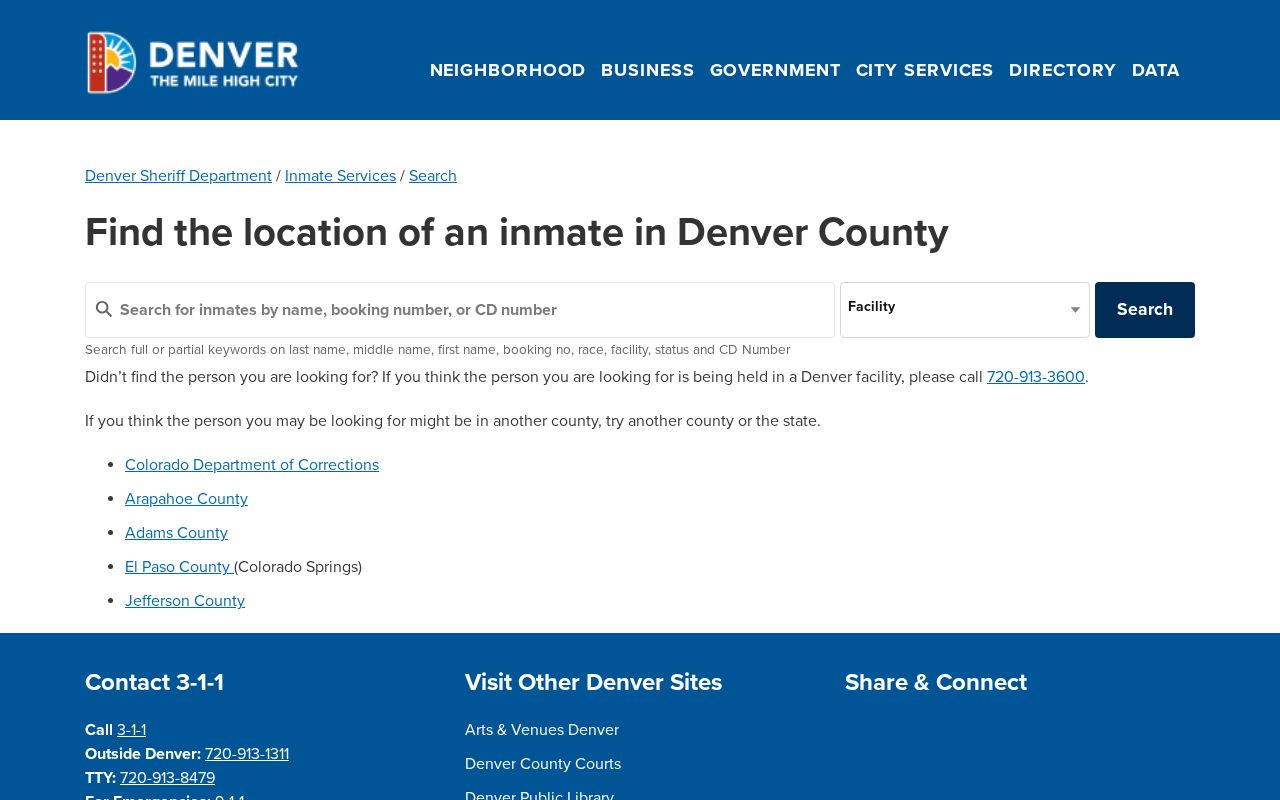
The blank form reflects Denver's targeted approach. It is not a browsable list, a daily arrest log, or a mugshot gallery of any kind.
Search Denver County Jail Roster
Denver Inmate Search tracks active local custody at two facilities. Those are the Van Cise-Simonet Downtown Detention Center and the Denver County Jail. You need at least one search term to proceed. There is no browse-all control, no booking-date filter, no "today" button, and no public photo field anywhere in the interface. Two people can share a name. Compare more than that single field. Once you find a match, save the booking or CD number for any follow-up.
| Search field | Use | What to check |
|---|---|---|
| First and last name | Find a person when no identifier is known | Spelling, age, and other matching details |
| Booking number | Match the exact custody event | Status, facility, charges, docket, and bond |
| CD number | Find the Denver custody identity | Booking details and linked court information |
| Facility filter | Narrow DDC or Denver County Jail | Current location before contact or a visit |
A miss can mean several things. Intake may not be finished, the spelling may be off, the person may have been released or transferred, the record may be restricted, or a different system may hold custody. DSD publishes no exact update schedule and no fixed window for how long a released record stays up. Call the inmate-information line if you believe the person is still held. For an older event, move on to records requests.
Denver Busted Feed Reality
Denver publishes no official 24-hour or 48-hour new-bookings page. No separate 72-hour, seven-day, or weekly booking blotter exists either. DSD offers no new-bookings tab and no date-range search. DPD puts out no full daily arrest bulletin. That means there is no official feed window, photo rule, cadence, weekend pattern, or archive to describe. The name-based locator cannot honestly be relabeled as an arrest feed.
What exists are narrower tools. DSD finds a known person in current custody. DPD and DSD requests retrieve a known event. Agency news covers selected incidents. The DPD crime dashboard tallies reported offenses, not booked people. One unofficial 30-day private list exists. Even a frequently refreshed list can lag, misidentify someone, omit a booking, or miss a later court result. To see that limited private window, visit the RecentlyBooked Denver County page.
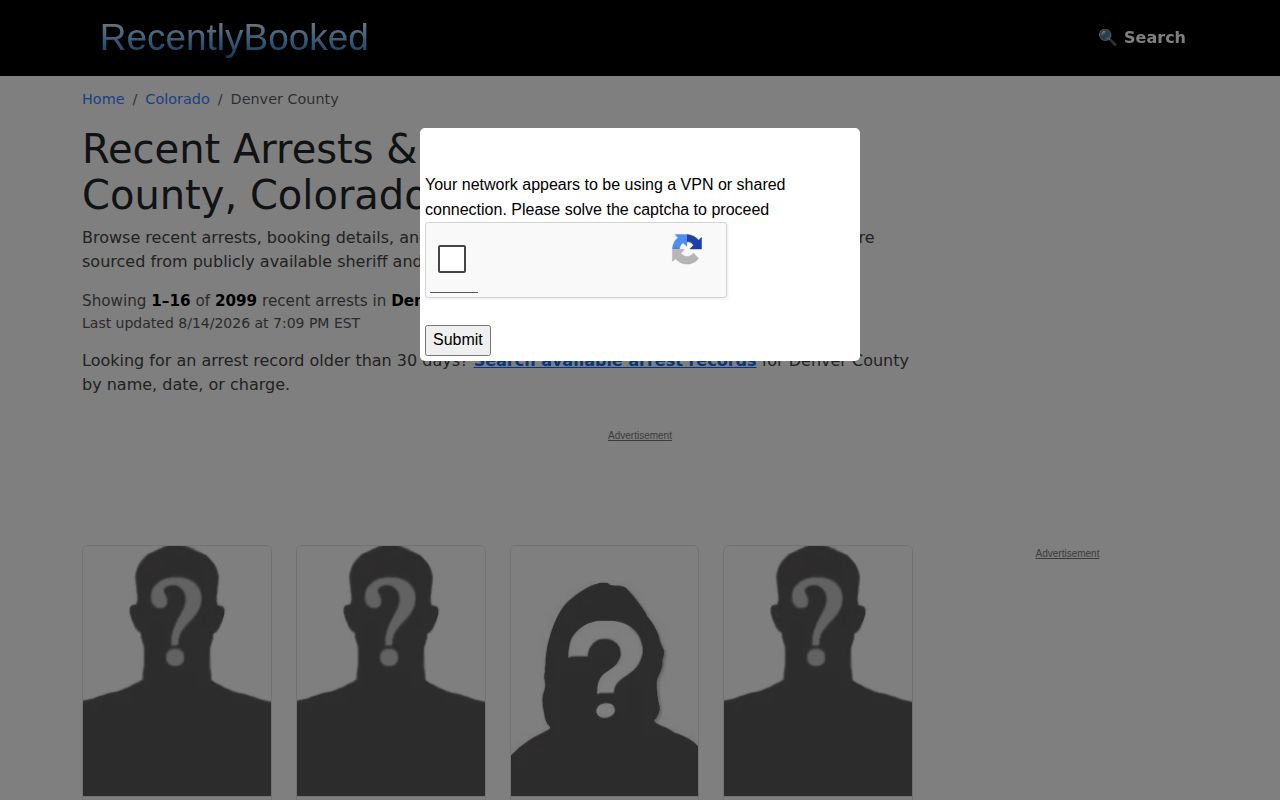
The publisher states the list refreshes several times a day and notes that Denver County does not supply its mugshot images. Treat it as neither an official roster nor proof of current custody.
Note: “Recent” is a publisher's window here, not a complete Denver Sheriff release or a court outcome.
Where Denver Mugshots Appear
Official channels come first, each with a defined custodian and scope. Private and editorial sources come after. Those are useful only as leads. Denver's own local system invites a particular misreading: intake creates a booking photo, yet the public locator leaves the photo out entirely.
| Channel | Photo? | Status | Best use |
|---|---|---|---|
| Denver Inmate Search | No public photo | Official | Named current local custody and booking data |
| DPD or DSD request | Possible | Official | A known local arrest, intake file, or available recent photo |
| CDOC Offender Search | Profile image may display | Official | A person sentenced into state corrections |
| Denver courts | Not a photo source | Official | Dockets, filed orders, and disposition |
| Local crime news | Sometimes | Editorial | Selected events and source documents, not all arrests |
| RecentlyBooked | No Denver images stated | Unofficial | A caveated 30-day data snapshot |
| Mugshots.com | Historical photos | Unofficial and stale | Old leads only; visible Denver dates checked ended in 2011 |
Looking for a Denver booking photo? The big local outlets cover arrests selectively. Denver7, the Denver Gazette, 9NEWS, CBS Colorado, the Denver Post, Westword, and FOX31 all run crime stories, but the pictures they publish are often scene shots, video stills, or images handed out by an agency rather than true booking photos. None of them keeps a complete Denver mugshot gallery. Private aggregator sites are an even weaker bet. Busted Newspaper, Arrests.org, and Mugshots.zone have no Denver County section worth using. JailExchange offers a generic Denver County Jail information page built to generate leads, not a live official roster, and its sweeping photo claims lose to Denver's verified no-photo locator. Mugshots.com does have a real Denver branch, but its listings date back to 2011, so treat it as an archive rather than a current-custody source. Watch the datelines, too. Aurora, Lakewood, Glendale, and Englewood sit in the metro area but outside Denver County entirely.
The Denver7 crime stream gives a quick feel for how story-driven this coverage is.
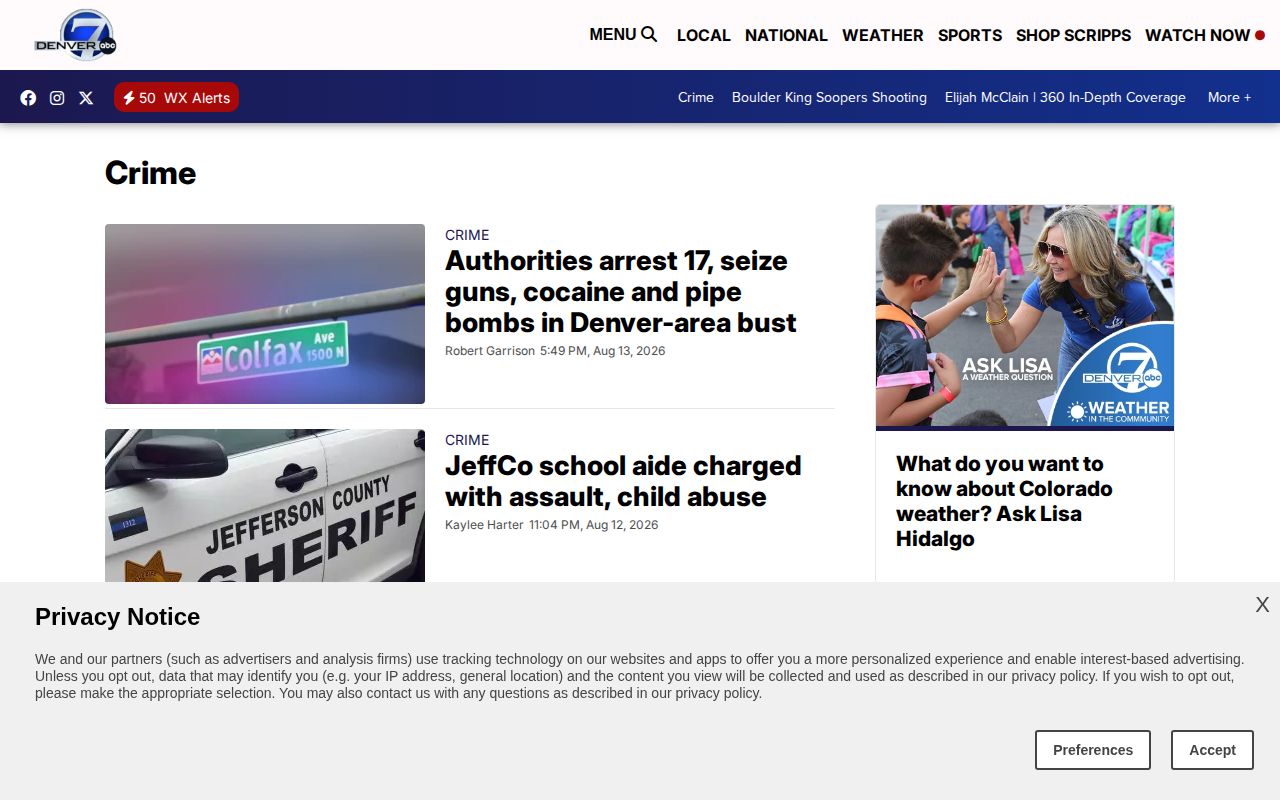
News reporting can tell you which agency made an arrest, and it may cite an affidavit or a court filing. It cannot confirm every booking or whether someone is in custody right now.
Denver Busted Custody Alerts
There is no DSD-branded inmate-search or mugshot app. Denver points people instead to Colorado VINE and VINELink, which send anonymous custody notices by phone, email, or text when someone is released or transferred. The service runs a mobile app and a phone line at 888-263-8463. What it does not do is publish booking photos, charges, or a full Denver feed of any kind.
VINE shines when the change in custody matters more than a picture. Have a booking number or solid identity details ready, register for the notice you want, and confirm any critical change directly with DSD. Agency posts on Facebook, Instagram, in the news, or through newsletters cover only selected announcements. Silence there means nothing about whether a booking happened.
Does Denver have a mugshot-alert app? No official one exists. VINE alerts on custody status, not on a stream of Denver County busted mugshots.
Denver County Custody Paths
One person can pass through several custody systems in a single case. Search results only make sense when the channel matches the stage. Leaving the jail does not end the matter. A state corrections profile photo may not be the original Denver intake image.
| Custody state | Where the record lives | Photo position |
|---|---|---|
| In Denver intake | DSD intake record; locator may not yet resolve | Digital photo is taken, not displayed publicly |
| Held in Denver | Denver Inmate Search and DSD | Request separately if needed |
| Released locally | DPD or DSD request, then the proper court | DPD recent photo may exist after detention processing |
| Sentenced to CDOC | Colorado inmate locator and CDOC profile | State offender image may display |
| Federal sentence | BOP locator | No photo in the public locator |
| Civil immigration custody | ICE ODLS | Location tool, not a photo source |
Federal custody runs on its own rules. The BOP public locator reaches inmates back to 1982. Search by a recognized number or by name with optional details. It shows no photographs at all. The U.S. Marshals Service offers no general public locator for federal pretrial custody. ICE's ODLS system is separate from criminal custody. It takes an A-number and country of birth, or an exact name and country of birth. Searches are blocked for anyone under 18, and results can lag during intake. The result supplies a detention location and contacts. Nothing more.
For the state side, the Colorado inmate locator is the official bridge to CDOC.
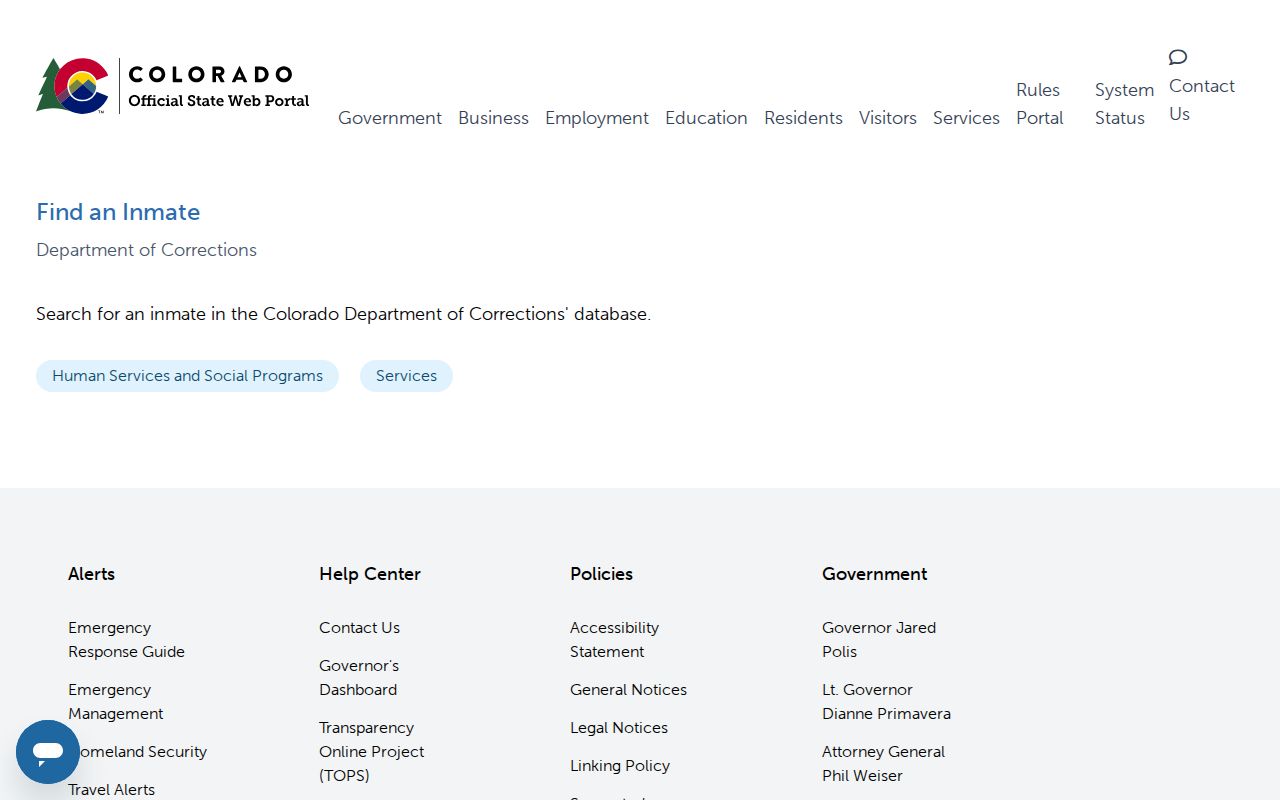
That record describes a state corrections identity. Not every Denver County arrest ends in a CDOC sentence, and CDOC is no substitute for the local jail roster.
Denver Busted Court Follow-Up
A booking detail often lists the docket number and the next court date. That date is just a hearing, not an outcome. Write down the booking number, arrest case number, court docket, and named court. Then search the matching portal. If the calendar leaves the question open, request the filed order or a certified copy. Two terms help here. An arraignment is the stage where the court addresses charges and pleas. A bond is a condition of release, not a judgment.
- Booking
- Local intake after an arrest.
- Arraignment
- A hearing addressing charges and plea.
- Bond
- Release conditions set by a court.
- Disposition
- The official outcome of a case.
- Expungement
- Colorado's juvenile record-clearing process.
The Denver County Court Quick Search covers only that court's own system. State-court matters in the Second Judicial District fall to Colorado Judicial dockets and Denver District Court. When a booking charge, an old news story, and a private page disagree, the official court record wins, since charges there can be reduced, dismissed, resolved by plea, or tried.
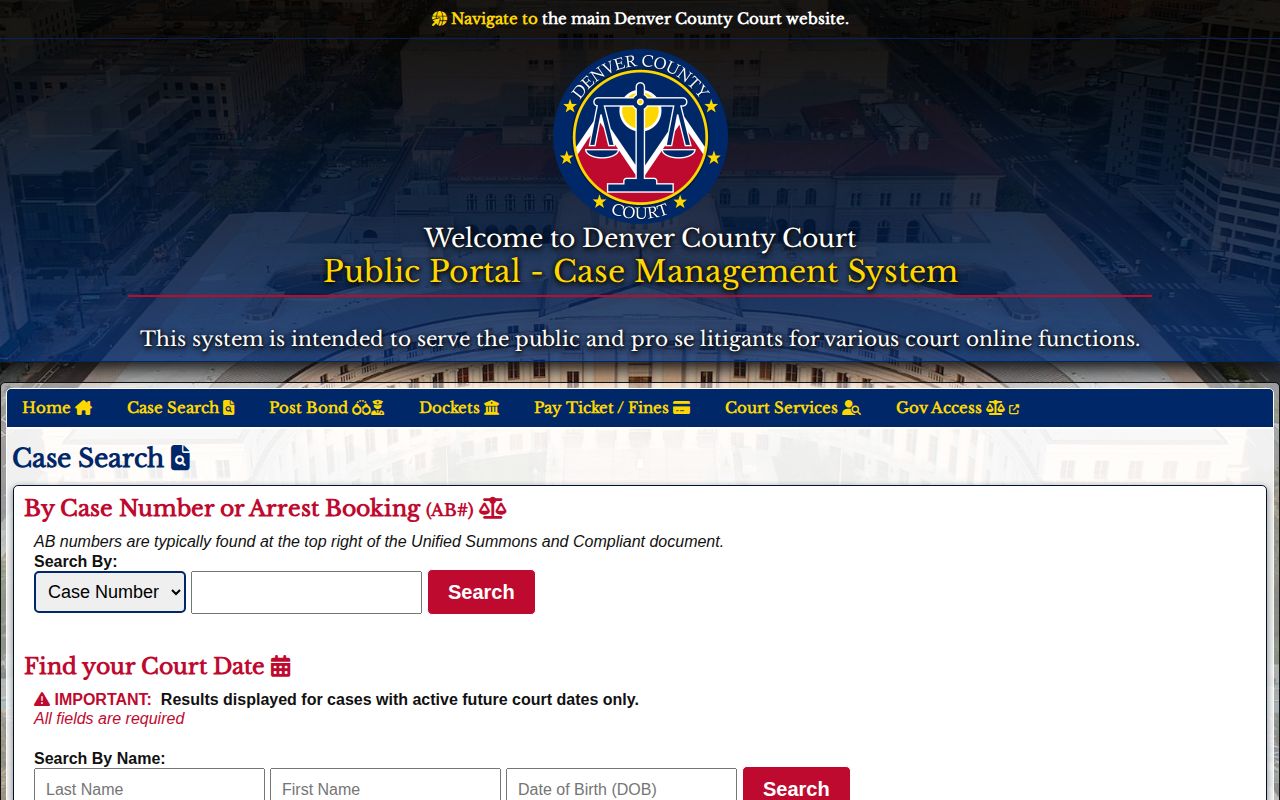
Once you know the local docket, the court screen is the next stop. A name dropping off a roster only tells you the live custody view changed.
Denver County Court Split
Denver breaks Colorado's usual pattern. The county and city form one consolidated government. Even so, Denver County Court runs its own separately administered records system. Denver District Court belongs to the Second Judicial District. County Court handles matters within its jurisdiction and felony complaints before any transfer. District Court handles felony criminal cases. A single statewide query cannot be assumed to reach every Denver matter.
Need a filed document? Colorado Judicial's record request process ordinarily aims to respond within three business days unless something unusual comes up. That clock belongs to the courts, not DPD or DSD. Request Denver District Court records at 1437 Bannock St., Room 256, Denver, CO 80202, or through its records email. The clerk's filed order is where the result lives.
Note: Identify County Court or District Court before treating any docket search as complete for a Denver booking.
Denver Mugshots by City
Denver County contains exactly one incorporated city. The city and county are the same government. Aurora, Glendale, Lakewood, and Englewood show up constantly in metro news. Adding them to a Denver County list would simply be false. The division of labor is clean. Denver Police Department handles city patrol and investigations. DSD books arrestees at the downtown intake center and houses them there or at Denver County Jail.
The dedicated Denver Busted Mugshots page traces that police-to-sheriff route. It also explains why DPD's incident dashboards are not an arrest log. Selected local coverage sits under Denver County Crime News instead. In both places, the official booking and court sources remain the final check on any secondary report.
Denver Booking Photo Archives
How long does a booking photo stick around? That depends on the agency, not the website. The Denver Sheriff Department publishes no fixed window for how long a released person stays in its locator. Nor does it post a retention term for digital booking photographs. Need the real answer? Ask the DSD records custodian for the schedule entries covering intake photos, booking jackets, identification records, and jail-management data. One caution: video retention rules do not transfer to mugshots.
Old photos live elsewhere. The Colorado State Archives holds historical corrections and reformatory photograph collections. That includes prisoner material from the nineteenth and twentieth centuries. Those holdings don't mean modern DSD images get shipped there. A current Denver booking image still has to be requested from DPD or DSD. For the historical state-prison side, start with CDOC and the Archives finding aid. Bring a full name plus any known aliases, years, institution, and prisoner number.